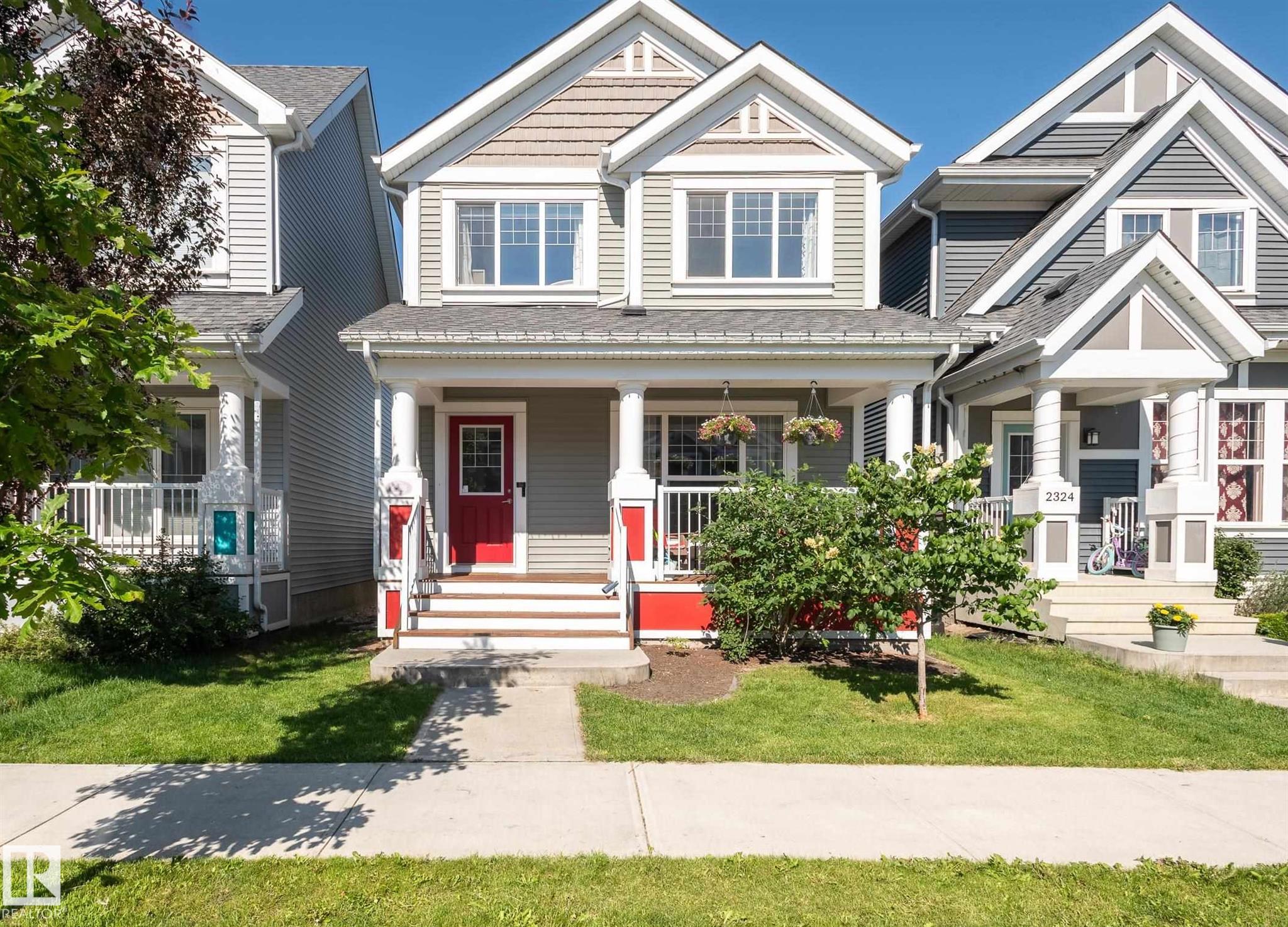
Edmonton Real Estate Market 2026: Prices, Trends & Forecast
The Edmonton real estate market in 2026 is moving through a period of transition. Buyers have more inventory to choose from than they did a year ago, sales activity has softened through the summer, and market conditions are becoming more balanced.
The latest Greater Edmonton Area (GEA) data from the REALTORS® Association of Edmonton shows that July 2026 recorded 2,535 residential sales, down 7.6% from June and 11.0% from July 2025. There were 4,258 new listings, while total inventory was 17.9% higher than a year earlier. The average residential selling price was $475,079, up 2.6% year over year. The MLS® Home Price Index (HPI) composite benchmark was $429,100, unchanged from July 2025.
These numbers tell a more nuanced story than simply saying that Edmonton home prices are rising or falling. Average prices remain above last year’s levels, but increasing inventory, slower sales and longer selling times are giving buyers more choice and putting greater pressure on sellers to price and present properties competitively.
This guide explains the Edmonton real estate market in 2026, including home prices, inventory, sales, property-type trends, market conditions, the outlook for the rest of the year, and what current conditions mean for buyers, sellers and real estate investors.
Market data note: Statistics in this article primarily refer to the Greater Edmonton Area (GEA) unless otherwise stated. City of Edmonton and Edmonton-region economic data may use different geographic boundaries.
Edmonton Real Estate Market 2026: Quick Snapshot
Based on the latest July 2026 GEA market statistics:
- Residential sales: 2,535
- New listings: 4,258
- Inventory: 17.9% higher than July 2025
- Average residential selling price: $475,079
- Average price year-over-year: Up 2.6%
- HPI composite benchmark: $429,100
- HPI benchmark year-over-year: Essentially unchanged
- Market direction: Cooling from spring activity with greater buyer choice
July’s results suggest that Edmonton’s summer market has become less active than the spring market. The REALTORS® Association of Edmonton reported declining sales, ample inventory, softer prices and longer days on market as signs that demand was subsiding.
What Is Happening in the Edmonton Real Estate Market in 2026?
The Edmonton market has changed considerably throughout the first part of 2026.
Early in the year, inventory was already elevated. Through the spring, sales activity strengthened, but new listings continued to add supply. By June, inventory was 22.2% higher than the same month of 2025. In July, inventory remained 17.9% above the previous year even as sales declined.
This combination is important.
When more properties are available while fewer buyers are purchasing them, buyers generally gain more choice and negotiating leverage. Sellers, meanwhile, face greater competition from other listings.
The market is therefore becoming less dependent on simply listing a home and waiting for multiple offers. Property condition, pricing, location and marketing strategy matter more in a market where buyers can compare several alternatives.
The City of Edmonton’s 2026 economic outlook also points to moderating housing activity. Its spring outlook forecasts 19,594 housing starts across the Edmonton CMA in 2026, down from 21,337 in 2025, while still remaining historically elevated.
Edmonton Home Prices in 2026
There are two important ways to look at Edmonton home prices:
- The average selling price
- The MLS® Home Price Index benchmark price
These measurements are not interchangeable.
In July 2026, the average residential selling price in the GEA was $475,079, up 2.6% from July 2025. The HPI composite benchmark was $429,100, which was essentially unchanged from a year earlier.
The difference matters because an average selling price can change depending on the mix of properties sold during a particular month. A greater share of higher-priced detached homes, for example, can push the average upward even if the value of a typical property has changed much less.
For buyers and sellers, the best comparison should therefore consider the property’s type, location, size, condition and comparable sales rather than relying on one city-wide average.
Edmonton Real Estate Prices by Property Type
Different property types are behaving differently in 2026.
Detached Homes
Detached homes continue to command the highest average prices among the major residential categories.
In July 2026, the average detached home price in the GEA was $585,726, down 1.3% from June but still 1.2% higher than July 2025. Detached sales decreased 7.9% from June and 8.3% from the previous year.
For sellers, this means demand remains present, but the market is less forgiving of unrealistic pricing.
For buyers, increased inventory can create opportunities to compare properties and negotiate more carefully.
Semi-Detached Homes
The average semi-detached price was $425,329 in July 2026, down 2.1% from June and 1.0% from July 2025. New listings remained 12.5% higher year over year, while sales declined 3.0% from July 2025.
This segment may appeal to buyers looking for a balance between affordability and space compared with detached homes.
Row and Townhomes
Row and townhouse properties averaged $292,756 in July 2026, down 3.5% from June and 1.3% from July 2025.
New listings were 7.2% higher than the previous year, while sales were down 16.5% year over year.
The increase in listings combined with weaker sales suggests buyers in this segment may have more choices than they did a year earlier.
Apartment Condominiums
Apartment condominiums averaged $214,521 in July 2026. That was 2.1% lower than June but 2.3% higher than July 2025.
Condo sales declined 21.3% year over year, while new listings were 14.6% lower than July 2025.
Condo buyers should pay particular attention to the individual building rather than relying solely on the broader Edmonton condo market. Condo fees, reserve funds, building condition, special assessments, location and unit characteristics can have a substantial effect on value.
Is Edmonton a Buyer’s or Seller’s Market in 2026?
The Edmonton market is becoming more balanced, but conditions can vary significantly by property type and neighbourhood.
The City of Edmonton’s Q1 2026 economic update reported that the Greater Edmonton Area’s sales-to-new-listings ratio had moved into balanced territory for the first time since Q1 2023. The City notes that a ratio between 40% and 60% generally represents balanced negotiating power between buyers and sellers.
By July, the REALTORS® Association of Edmonton was reporting declining sales, ample inventory, softer prices and longer selling times, describing the numbers as signs that demand was subsiding.
That does not mean every Edmonton property is automatically in a buyer’s market.
A well-priced home in a desirable location can still attract strong interest. An overpriced property with condition issues may sit considerably longer.
The correct question is therefore not simply:
“Is Edmonton a buyer’s or seller’s market?”
A better question is:
“What are the current conditions for this property type and neighbourhood?”
Edmonton Housing Inventory in 2026
Inventory is one of the most important market indicators to watch this year.
In June 2026, GEA inventory was 22.2% higher than June 2025. By July, inventory remained 17.9% above the previous year.
Higher inventory generally gives buyers:
- More properties to compare
- More time to make decisions
- Greater negotiating opportunities
- More choice across neighbourhoods and property types
For sellers, higher inventory means:
- More competition
- Greater importance of accurate pricing
- More importance placed on presentation
- A greater need for professional marketing
- Potentially longer selling times
This is why sellers should not automatically price a property based on what a neighbour achieved several months earlier.
What Is Driving the Edmonton Housing Market in 2026?
Several factors are influencing Edmonton real estate this year.
Interest Rates
Mortgage rates affect purchasing power and monthly housing costs. Even modest changes can influence how much a buyer can comfortably borrow.
Buyers should evaluate their mortgage affordability using their actual financing options rather than assuming that a change in the Bank of Canada’s policy rate will immediately translate into the same change in every mortgage rate.
Population Growth
Population growth supports housing demand.
The City of Edmonton’s spring 2026 outlook forecasts 1.5% population growth for the Edmonton CMA and 1.7% for the City of Edmonton in 2026.
Continued population growth can support long-term housing demand, although the effect varies across property types and price ranges.
Employment and Economic Growth
The City forecasts 2.3% employment growth in the Edmonton CMA in 2026 and 2.5% real GDP growth.
Employment conditions matter because households need income stability to qualify for mortgages and purchase homes.
New Housing Supply
New construction is another major factor.
The City forecasts approximately 19,594 housing starts in the Edmonton CMA in 2026, still a historically elevated level despite an expected decline from 2025.
Higher housing supply can help improve choice for buyers, but the impact depends on where new homes are being built and what types of housing are being added.
Edmonton Real Estate Forecast for 2026
No one can accurately guarantee where Edmonton home prices will finish the year.
A useful forecast should therefore focus on the factors that are visible today.
The current data suggests a market with:
- Higher inventory
- Slower summer sales
- More balanced conditions
- Moderate year-over-year average price growth
- Different performance across property types
- More negotiating room for many buyers
The July 2026 data is particularly important. Residential sales fell 11.0% year over year, inventory was 17.9% higher, and the HPI benchmark was essentially unchanged from July 2025.
This suggests that the remainder of 2026 may be more competitive for sellers and more flexible for buyers than the strongest periods of the recent Edmonton market.
However, Edmonton is not one homogeneous housing market.
A detached home in a desirable southwest neighbourhood can behave very differently from an apartment condominium in another part of the city.
For that reason, buyers and sellers should base decisions on current comparable sales, inventory, days on market and neighbourhood-level conditions.
What 2026 Means for Edmonton Home Buyers
For buyers, the increase in inventory is one of the most important developments of 2026.
More choice can reduce the pressure to make an immediate decision and gives buyers more opportunity to compare:
- Asking price
- Recent comparable sales
- Property condition
- Location
- Property taxes
- Condo fees
- Renovation requirements
- Potential resale value
But more choice does not mean every property is a bargain.
A buyer should still determine a realistic budget, obtain mortgage pre-approval, understand closing costs and evaluate each property individually.
Buyers should pay particular attention to:
Price versus comparable sales:
An asking price is a seller’s strategy, not proof of market value.
Days on market:
Longer marketing periods can provide negotiating opportunities, but they can also indicate pricing or property-condition issues.
Property taxes:
Annual property taxes should be included in the total cost of ownership.
Inspection:
A professional inspection can identify issues that may not be obvious during a showing.
Future resale:
Location, property type, layout, condition and neighbourhood demand can all affect future marketability.
What 2026 Means for Edmonton Home Sellers
Sellers are operating in a market with more competition than a year ago.
That makes preparation more important.
A seller should consider:
1. Pricing accurately
Overpricing can cause a listing to sit while competing properties attract buyers.
2. Improving presentation
Professional photography, decluttering, repairs and appropriate staging can help a property compete.
3. Understanding comparable sales
Recent sold properties are more useful than simply looking at active listings.
4. Monitoring competition
The number and quality of competing properties can change quickly.
5. Preparing for negotiation
With more inventory available, buyers may have greater leverage on price and conditions.
A good Edmonton listing strategy should therefore be based on current market evidence rather than a generic percentage increase from last year’s price.
What 2026 Means for Edmonton Real Estate Investors
Investors should look beyond short-term price movements.
Important factors include:
- Purchase price
- Expected rent
- Vacancy risk
- Property taxes
- Insurance
- Maintenance
- Condo fees
- Financing costs
- Property management
- Potential appreciation
- Local rental demand
A property that appears inexpensive is not necessarily a good investment.
The stronger question is:
Does the property’s expected income and long-term potential justify the purchase price and operating costs?
Edmonton’s continued population growth and economic expansion can support housing demand, but investors should evaluate individual properties and neighbourhoods rather than assuming that the entire market will perform equally. The City’s 2026 outlook forecasts continued population and employment growth in the Edmonton region.
Edmonton Real Estate Market by Neighbourhood
Edmonton is made up of many distinct neighbourhood markets.
Price, inventory and buyer demand can differ significantly between communities.
For example, a family-oriented suburban neighbourhood may have different buyer demand from a central condominium market. Established communities with limited land supply can behave differently from areas with substantial new construction.
When evaluating a specific neighbourhood, consider:
- Recent sold prices
- Active inventory
- Days on market
- Property types
- School and amenity access
- Transportation
- New construction
- Rental demand
- Future development
- Property taxes
For buyers and sellers, neighbourhood-level analysis is often more useful than relying on the city-wide average.
Edmonton Real Estate Market Updates
The Edmonton market changes every month.
For the most recent data, follow the latest monthly market updates from Alamgir4Realty and compare them with statistics published by the REALTORS® Association of Edmonton.
The REALTORS® Association currently publishes monthly and weekly market statistics for the Greater Edmonton Area.
You can also use our latest market update to review current sales, listings, prices and inventory.
[Edmonton Real Estate Market Update: Latest 2026 Data]
Frequently Asked Questions About Edmonton Real Estate in 2026
Is Edmonton real estate a good investment in 2026?
Edmonton can offer opportunities for investors, but suitability depends on the property, purchase price, rental income, financing costs, expenses and neighbourhood. Investors should evaluate cash flow and long-term potential rather than relying only on expected price appreciation.
Are Edmonton home prices increasing in 2026?
Average residential prices remain above year-ago levels. In July 2026, the GEA average residential selling price was $475,079, up 2.6% from July 2025. However, the HPI composite benchmark was $429,100 and was unchanged year over year, showing why different price measures can tell different stories.
Is 2026 a good time to buy a house in Edmonton?
The answer depends on the buyer’s financial position, timeframe and property choice. Higher inventory can give buyers more selection and negotiating opportunities, but buyers should still compare properties against recent comparable sales and ensure the purchase fits their long-term budget.
Is Edmonton a buyer’s market in 2026?
Market conditions have moved toward greater balance. The City of Edmonton reported that the GEA sales-to-new-listings ratio entered balanced territory in Q1 2026, while later summer data showed rising inventory, declining sales and longer selling times. Conditions can vary by property type and neighbourhood.
What is the average home price in Edmonton in 2026?
In July 2026, the average residential selling price across the Greater Edmonton Area was $475,079. Detached homes averaged $585,726, semi-detached homes averaged $425,329, row/townhomes averaged $292,756, and apartment condominiums averaged $214,521.
Will Edmonton home prices go up in 2026?
No reliable source can guarantee the direction or size of future price changes. Current conditions point to higher inventory, softer summer sales and more balanced market conditions. Interest rates, employment, population growth, new listings and buyer demand will influence how the market develops through the rest of 2026.
How much inventory is available in Edmonton?
In July 2026, inventory in the Greater Edmonton Area was 17.9% higher than in July 2025. Inventory had increased 22.2% year over year in June, showing that supply remains substantially higher than it was a year earlier.
What Edmonton Buyers and Sellers Should Do Next
The 2026 Edmonton real estate market rewards preparation more than guesswork.
If you’re buying:
- Get mortgage pre-approved.
- Define your total monthly housing budget.
- Compare recent sold properties.
- Evaluate property taxes and ongoing costs.
- Inspect the property before committing.
- Research the neighbourhood.
- Avoid making decisions based solely on city-wide averages.
If you’re selling:
- Review recent comparable sales.
- Price according to current market conditions.
- Prepare the property before listing.
- Use professional photography and marketing.
- Monitor competing listings.
- Be prepared to negotiate.
If you’re investing:
- Calculate realistic rental income.
- Include taxes, insurance, maintenance and financing costs.
- Research vacancy and rental demand.
- Compare multiple properties.
- Evaluate long-term resale potential.
Final Thoughts: Edmonton Real Estate in 2026
The Edmonton real estate market in 2026 is not simply a rising or falling market.
It is a more balanced and increasingly selective market.
Inventory is substantially higher than a year ago, summer sales have softened, and buyers have more options. At the same time, average residential prices remain above 2025 levels, while individual property types are producing very different results.
For buyers, the environment can provide more choice and negotiating opportunities.
For sellers, accurate pricing and strong presentation are becoming increasingly important.
For investors, the focus should remain on purchase price, cash flow, operating costs, rental demand and long-term fundamentals.
Most importantly, the Edmonton market should not be judged by one headline number. The right decision depends on the specific property, neighbourhood, financing situation and objective.
If you’re considering buying, selling or investing in Edmonton real estate, a property-specific analysis is more useful than relying on a city-wide average.
Talk with Alamgir Hossain, REALTOR®, about your Edmonton real estate goals and get a strategy based on the current market.
Sources
- REALTORS® Association of Edmonton — Monthly Market Statistics
- City of Edmonton — Economic Reports and Forecasts
- City of Edmonton — Q1 2026 Economic Update
Market statistics and economic conditions can change. Always verify the latest available data before making a real estate or investment decision.

I’m a licensed REALTOR® with eXp Realty, proudly serving Edmonton and surrounding communities. With a background as a Professional Engineer (P.Eng), I bring analytical thinking, precision, and a client-first approach to every real estate transaction — helping buyers, sellers, and investors make informed decisions with honesty and expertise.